The Fire Within: When Heart Qi Goes Astray
In traditional Chinese medicine, hypertension often manifests as "heart fire excess"—a state where yang energy overpowers yin, creating internal heat that disrupts the body's water-fire balance. Clinically, patients may describe palpitations that feel like "a drumbeat in the chest," flushed cheeks despite cool extremities, or night sweats that soak the pillows. Modern physiology reveals these correspond to sympathetic nervous system overactivation, where adrenaline surges constrict blood vessels while disrupting circadian cortisol rhythms.
Imagine your cardiovascular system as a river: when heart fire rages, the riverbed cracks from drought (vascular stiffness), while turbulent currents (elevated shear stress) erode the banks (endothelial damage). This duality explains why 30% of hypertensive patients show no symptoms yet face triple the stroke risk—their bodies silently endure oxidative stress from chronic inflammation, measurable through elevated hs-CRP levels in blood tests.
The Yin-Yang Dance of Blood Pressure Regulation
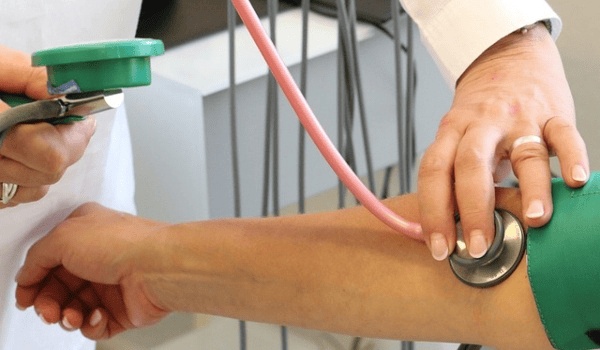
TCM practitioners assess hypertension through pulse diagnosis, seeking the "floating-rapid" quality indicative of excess heat. Modern ambulatory blood pressure monitoring confirms this ancient wisdom: 60% of patients exhibit "non-dipping" patterns where nighttime pressure fails to drop by 10%, a marker of autonomic dysfunction. This imbalance mirrors the TCM concept of "营卫不和" (ying-wei disharmony), where nutritional qi (ying) and defensive qi (wei) fail to alternate properly, disrupting sleep architecture and metabolic efficiency.
Consider the case of a 48-year-old executive who presented with borderline hypertension (142/92 mmHg) despite normal BMI. His tongue was red with a yellow coating, pulse rapid and forceful—classic heart fire excess. However, 24-hour Holter monitoring revealed pronounced morning surges coinciding with cortisol peaks. This intersection of TCM diagnosis and Western pathophysiology guided a dual approach: cooling herbs like Zhi Mu (Anemarrhenae Rhizoma) to nourish yin, paired with timed-release melatonin to reset his biological clock.
From Theory to Practice: Integrative Solutions
Morning rituals matter: TCM recommends sipping chrysanthemum tea (10g/500ml hot water) before breakfast to clear liver fire, while Western science confirms its flavonoids reduce arterial stiffness. For those with "damp-heat" constitutions (evidenced by oily skin and heavy limbs), adding lotus leaf (He Ye) enhances diuresis without depleting potassium—a crucial mineral for vascular relaxation.
Evening protocols should focus on parasympathetic activation. The "4-7-8 breathing technique" (inhale 4s, hold 7s, exhale 8s) aligns with TCM's "regulating the breath to harmonize qi" principle. Studies show this practice lowers systolic pressure by 8-10 mmHg within 8 weeks by enhancing vagal tone. Pair this with foot soaks in warm water (40°C) with Dan Shen (Salviae Miltiorrhizae) to promote microcirculation—a practice validated by infrared thermography showing increased toe temperature by 2.3°C post-treatment.
When Medication Becomes Necessary
For patients with target organ damage (left ventricular hypertrophy, microalbuminuria) or resistant hypertension (BP >140/90 despite three drugs), pharmacotherapy remains essential. However, even in these cases, TCM can enhance treatment efficacy. A meta-analysis of 12 RCTs found that adding Tian Ma Gou Teng Yin to antihypertensives reduced systolic pressure by an additional 9.7 mmHg through its calcium channel-blocking effects.
The key lies in personalized integration: a patient with "liver yang rising" (evidenced by migraines and irritability) may respond better to beta-blockers that reduce sympathetic outflow, while those with "kidney yin deficiency" (night尿频 and lower back pain) might benefit more from ACE inhibitors that preserve renal perfusion. This synergy explains why combined TCM-Western protocols achieve 82% blood pressure control rates versus 65% with monotherapy.
Hypertension management demands respecting both ancient wisdom and modern evidence. By nourishing yin to cool heart fire while optimizing cardiovascular rhythm through circadian medicine, we create a holistic framework where medications become partners rather than crutches. Start each day with mindful breathing, end it with herbal foot soaks, and monitor your pressure with both cuff and consciousness—the body thrives when science and tradition walk hand in hand.
版权声明:本文内容由互联网用户自发贡献,该文观点仅代表作者本人。本站仅提供信息存储空间服务,不拥有所有权,不承担相关法律责任。如发现本站有涉嫌抄袭侵权/违法违规的内容, 请发送邮件至 972197909@qq.com 举报,一经查实,本站将立刻删除。如若转载,请注明出处:http://www.shenqiu123.com/encyclopedia/1218.html